Transformations Clinical Psychology

Solution-Focused Brief Therapy (SFBT)

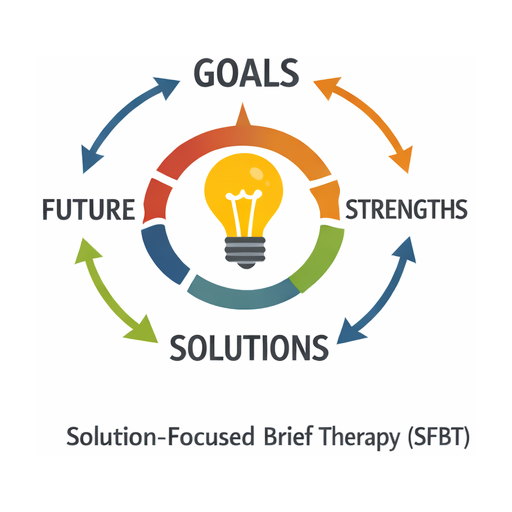
Solution-Focused Brief Therapy (SFBT) is a widely used therapy approach that differs from traditional forms of therapy. SFBT is centred around establishing solutions in the present moment and exploring client’s hopes for the future. In this way, clients are able to receive a relatively fast, yet realistic, solution to their problems. This method deals less with the “why” behind problems and more with the “how” of treating these challenges.

SFBT emphasises solutions rather than problems. It helps clients identify strengths and resources to achieve specific goals. Techniques include scaling questions and envisioning preferred futures, making it a short-term, goal-oriented approach.

What is SFBT?

Solution-Focused Brief Therapy is a short-term, goal-oriented therapeutic approach that emphasises solutions rather than problems. Developed in the 1980s, it focuses on clients’ strengths and resources to create positive change quickly.


Unlike traditional therapies that explore the root causes of issues, SFBT concentrates on what works and how to replicate success. It encourages clients to envision their preferred future and identify practical steps to achieve it.


This collaborative method is widely used for mental health, coaching, and organisational settings because of its efficiency and adaptability. Sessions typically last fewer than ten meetings, making it cost-effective and time-sensitive.

What are the underlying scientific principles?

Solution-Focused Brief Therapy (SFBT) is a short-term, goal-oriented psychotherapy model developed by Steve de Shazer and Insoo Kim Berg. It is grounded in social constructivism and empirical observation, emphasising solutions rather than problems. Instead of exploring the origins of difficulties, SFBT focuses on clients’ strengths, resources, and desired future outcomes. The approach assumes that individuals already possess the capabilities to create meaningful change. By fostering collaboration and highlighting exceptions to problems, SFBT promotes rapid progress and practical strategies. Its efficiency and adaptability make it widely used in mental health, education, and organisational contexts.

Social Constructivism

SFBT is rooted in social constructivist theory, viewing reality as co-constructed through dialogue. Therapy focuses on shaping narratives toward possibility rather than pathology, empowering clients to envision achievable futures.

Future Orientation

Sessions emphasise present and future goals, only referencing the past for empathy. This principle accelerates progress by concentrating on actionable steps toward desired outcomes rather than historical analysis.

Client Expertise

Clients are considered experts in their own lives. Therapists facilitate discovery rather than prescribe solutions, reinforcing autonomy and self-efficacy in creating personalised strategies for change.

Strengths-Based Approach

Therapy highlights existing resources, resilience, and successful past behaviours. By amplifying what works, SFBT fosters confidence and leverages inherent capabilities to overcome challenges effectively.

Change is Constant

SFBT assumes change is inevitable and possible. Even small shifts can lead to significant transformation, encouraging clients to notice and build upon positive differences in their lives.

Empirical Pragmatism

The model evolved from observing effective interventions rather than abstract theory. Its evidence-based, solution-building techniques prioritise efficiency, often achieving results within two to six sessions.

How does it work?

Solution-Focused Brief Therapy is a short-term, goal-oriented therapeutic approach that emphasises solutions rather than problems. Developed in the 1980s, SFBT helps clients identify strengths and resources to create positive change. Instead of analysing past issues, it focuses on present and future possibilities, encouraging clients to envision their preferred outcomes. The therapist collaborates with clients to set achievable goals and explore practical steps towards them. This approach is widely used in counselling, coaching, and organisational settings because of its efficiency and empowering nature. SFBT promotes hope, resilience, and self-efficacy, making it ideal for time-limited interventions.

Goal-Oriented Focus

SFBT prioritises clear, achievable goals set by the client, shifting attention from problems to desired outcomes. This fosters motivation and clarity, enabling practical steps toward meaningful change.

Future Orientation

Rather than dwelling on past difficulties, SFBT encourages clients to imagine a preferred future. This positive outlook helps build hope and directs energy towards constructive actions.

Client Strengths and Resources

Therapists highlight existing skills, successes, and resources. By recognising what already works, clients gain confidence and use their strengths to overcome challenges effectively.

Brief and Time-Efficient

Typically lasting 3–8 sessions, SFBT is designed for quick results. Its structured, solution-focused nature makes it ideal for busy individuals or organisations seeking rapid improvement.

Collaborative Partnership

Therapists and clients work as equals, fostering empowerment and respect. This partnership ensures solutions are tailored to the client’s context and values, enhancing engagement and ownership.

Use of Scaling Questions

SFBT employs scaling questions (e.g., rating progress from 0–10) to measure improvement and clarify goals. This simple tool promotes reflection and tracks change effectively.

When Is It Used?

Solution-Focused Brief Therapy (SFBT) is typically used when individuals or groups seek practical, short-term strategies to overcome challenges without delving deeply into past problems. It is applied in contexts such as counselling, coaching, mental health support, and organisational development. SFBT focuses on identifying strengths, resources, and achievable goals, making it ideal for situations where time is limited or rapid progress is needed. Common uses include addressing stress, improving communication, resolving workplace conflicts, and supporting behavioural change. By emphasising solutions rather than problems, SFBT empowers clients to create actionable steps towards positive outcomes efficiently and effectively.

What are the therapy options that Transformations Clinical Psychology can offer me?

It is notable that many mental health conditions share similar symptoms which is why it is highly recommended that a qualified psychologist provides an accurate assessment, diagnosis and tailored treatment plan based on evidence-based methods to ensure effective recovery for your well-being.

Please contact us or follow this link if you would like to set up an assessment with a psychologist at Transformations Clinical Psychologist.

Meet Our Team​​

Meet our friendly and experienced team, here to help you with confidence and care.

Dr. Natalie Robinson
Principal Clinical Psychologist
Joanne Sheehan
Consultant Clinical Psychologist
Catherine Walker
Consultant Registered Psychologist
Dr. Mahsa Kia

Farsi

English

Consultant Clinical Psychologist
Jessica Lam

Cantonese

English

Consultant Clinical Psychologist
Ash Morad
Consultant Clinical Psychology Registrar & Registered Psychologist
Jenny Lee
Consultant Clinical Psychologist
Patricia Kiely
Consultant Clinical Psychologist
Amy Wang

Mandarin

English

Consultant Clinical Psychology Registrar & Registered Psychologist
Linda Tateossian
Administration Manager
Claudia Bonaccorso
Administration Assistant

We are here to support you​

Please contact us or click on this link if you would like to see one of our experienced psychologists 

FAQ

Your first appointment is 50–60 minutes. We’ll get to know you—what’s been hard, what you’d like to change, and what’s helped before. You’re welcome to bring notes or just come as you are; we’ll go at your pace. Please complete the online intake and consent forms beforehand. Sessions are available in person (Sydney) or via secure telehealth across Australia. We’ll finish with a clear plan and time for your questions. If you’re in immediate danger, call 000.

You can book without a referral. If your GP provides a Mental Health Treatment Plan, you may be eligible for a Medicare rebate. We’ll check your eligibility and confirm your out-of-pocket cost before you commit. Private health (Extras) can’t be claimed with Medicare for the same session—please check your fund for coverage. If cost is a concern, let us know and we’ll talk through options.

Yes. Your sessions and records are kept private under strict legal and ethical standards. There are a few exceptions—if there’s a serious risk of harm, concerns about a child or vulnerable person, or a court order. If we ever need to share information, we’ll explain why, what will be shared, and involve you as much as possible.

Scroll to Top