
Schema Therapy (ST)
Schema Therapy (ST) integrates cognitive-behavioural, attachment, and experiential techniques to identify and modify deeply rooted maladaptive schemas. It helps individuals address emotional patterns, improve coping strategies, and foster healthier relationships through insight, behavioural change, and emotional healing.
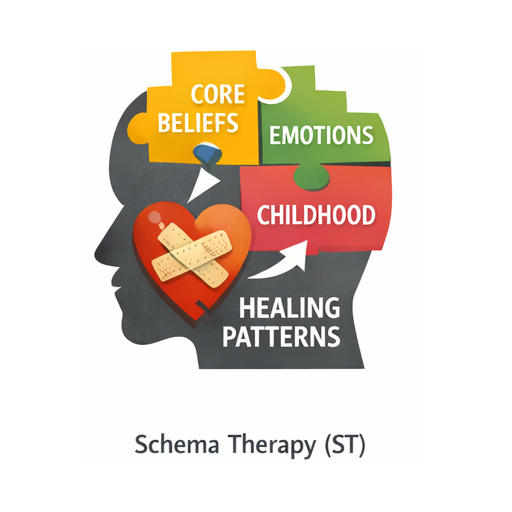
Schema Therapy addresses deep-rooted patterns formed in childhood (schemas) that affect adult behaviour. It combines CBT, attachment theory, and experiential techniques to heal maladaptive schemas and develop healthy coping modes.
What is ST?
Schema Therapy, developed by Jeffrey Young, is an integrative psychotherapy designed to treat chronic psychological disorders, especially personality disorders and treatment-resistant conditions. It combines cognitive-behavioural, attachment, Gestalt, and psychodynamic principles to address deeply ingrained patterns formed during childhood. The therapy centres on Early Maladaptive Schemas (EMS)—pervasive, self-defeating themes originating from unmet emotional needs—and aims to modify these schemas through cognitive, experiential, and behavioural techniques. By focusing on core emotional needs, coping styles, and schema modes, Schema Therapy provides a comprehensive framework for understanding and transforming maladaptive patterns, fostering healthier relationships and emotional regulation.
- Persistent negative self-beliefs
- Chronic feelings of emptiness
- Difficulty regulating emotions
- Fear of abandonment
- Perfectionism or rigid standards
- Self-sabotaging behaviours
- Overdependence or avoidance in relationships
- Intense guilt or shame
What are the underlying scientific principles?
Early Maladaptive Schemas (EMS)
Schemas are enduring cognitive-emotional patterns formed from unmet childhood needs. They shape perceptions of self, others, and the world, driving chronic psychological distress and maladaptive behaviours.
Core Emotional Needs
Healthy development requires secure attachment, autonomy, emotional expression, playfulness, and realistic limits. When these needs are unmet, maladaptive schemas emerge, influencing lifelong psychological functioning.
Integrative Framework
Schema Therapy synthesises cognitive-behavioural, attachment, Gestalt, and psychodynamic theories, creating a holistic approach to modify entrenched patterns beyond traditional symptom-focused therapies.
Coping Styles
Individuals adapt to schemas through surrender, avoidance, or overcompensation. These coping styles perpetuate maladaptive patterns, reinforcing emotional distress and dysfunctional behaviours.
Schema Modes
Moment-to-moment emotional states triggered by schemas influence reactions and behaviours. Therapy targets these modes to restore adaptive functioning and emotional balance.
Experiential and Cognitive Techniques
Imagery rescripting, role-play, and cognitive restructuring help patients challenge schemas, meet unmet needs, and develop healthier coping strategies for lasting change.
How does it work?
Schema Therapy is an integrative psychotherapy combining cognitive-behavioural, attachment, and experiential techniques. It focuses on identifying and changing deeply rooted maladaptive schemas—patterns of thoughts, feelings, and behaviours formed in childhood. These schemas influence how individuals perceive themselves and others, often leading to emotional distress and unhealthy coping styles. By addressing these core beliefs, Schema Therapy helps clients develop healthier perspectives and behaviours. It is particularly effective for chronic psychological issues, personality disorders, and treatment-resistant conditions. Through techniques like imagery, dialogue, and behavioural pattern-breaking, clients learn to meet unmet emotional needs and build resilience.
Core Concept
Schemas are enduring negative patterns formed early in life. They shape thoughts, emotions, and behaviours, often causing distress. Therapy aims to identify and modify these maladaptive schemas for lasting change.
Schema Modes
Modes are momentary emotional states triggered by schemas. Common modes include Vulnerable Child, Angry Child, and Healthy Adult. Therapy strengthens the Healthy Adult mode to manage others effectively.
Origins of Schemas
Schemas develop from unmet emotional needs in childhood, such as safety, love, and autonomy. Dysfunctional parenting or trauma often reinforces these patterns, influencing adult relationships and coping styles.
Therapeutic Techniques
Schema Therapy uses cognitive restructuring, experiential exercises like imagery rescripting, and behavioural pattern-breaking. These techniques challenge negative beliefs and promote healthier emotional responses and coping strategies.
Role of Therapist
Therapists provide a corrective emotional experience through empathy and limited reparenting. This supportive relationship helps clients feel safe, fostering trust and enabling schema change over time.
Applications
Effective for personality disorders, chronic depression, and anxiety. Schema Therapy addresses deep-rooted issues that traditional CBT may not resolve, offering long-term improvement and emotional stability.
When Is It Used?
Schema Therapy is typically used when traditional approaches like Cognitive Behavioural Therapy (CBT) have not fully addressed chronic psychological issues. It is particularly effective for individuals with long-standing emotional difficulties, personality disorders, or deeply ingrained negative patterns that stem from unmet childhood needs. This integrative therapy combines elements of CBT, attachment theory, and experiential techniques to help clients identify and change maladaptive schemas—core beliefs that influence thoughts, feelings, and behaviours. By targeting these underlying patterns, Schema Therapy aims to foster healthier coping strategies and improve emotional well-being, making it suitable for complex cases requiring deeper, long-term intervention.
Conditions and Issues Where ST Is Commonly Applied
Less Common or Indirect Use
What are the therapy options that Transformations Clinical Psychology can offer me?
Please contact us or follow this link if you would like to set up an assessment with a Psychologist at Transformations Clinical Psychology.
Meet Our Team
Meet our friendly and experienced team, here to help you with confidence and care.







Amy Wang
Mandarin
English

We are here to support you
Please contact us or click on this link if you would like to see one of our experienced psychologists
FAQ
Q1. What happens in the first session? Do I need to prepare?
Your first appointment is 50–60 minutes. We’ll get to know you—what’s been hard, what you’d like to change, and what’s helped before. You’re welcome to bring notes or just come as you are; we’ll go at your pace. Please complete the online intake and consent forms beforehand. Sessions are available in person (Sydney) or via secure telehealth across Australia. We’ll finish with a clear plan and time for your questions. If you’re in immediate danger, call 000.
Q2. How do fees and Medicare/private insurance work? Do I need a GP referral?
You can book without a referral. If your GP provides a Mental Health Treatment Plan, you may be eligible for a Medicare rebate. We’ll check your eligibility and confirm your out-of-pocket cost before you commit. Private health (Extras) can’t be claimed with Medicare for the same session—please check your fund for coverage. If cost is a concern, let us know and we’ll talk through options.
Q3. Will my information be kept confidential?
Yes. Your sessions and records are kept private under strict legal and ethical standards. There are a few exceptions—if there’s a serious risk of harm, concerns about a child or vulnerable person, or a court order. If we ever need to share information, we’ll explain why, what will be shared, and involve you as much as possible.