
Acceptance and Commitment Therapy (ACT)
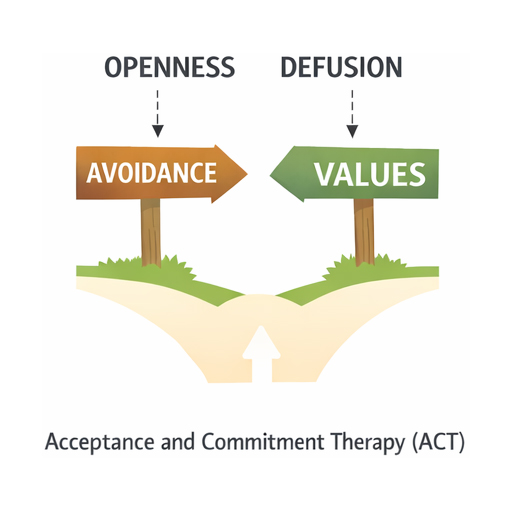
What is ACT?
Acceptance and commitment therapy (ACT) a widely used intervention that takes an action-oriented approach. The purpose of ACT is to assist clients in ceasing their avoidance and denial and instead, foster acceptance of their emotions so that they learn to prevent emotional responses from interfering with their daily functioning. The goal is for clients to accept their current struggles and instead, commit to making amendments in their behaviour irrespective of the emotions and situations they may be facing.
What are the underlying scientific evidence?
Multiple research studies have demonstrated that ACT can significantly improve one’s quality of life, especially for those struggling with chronic pain conditions. ACT has also been demonstrated to be as effective as Cognitive Behavioural Therapy. The efficacy of ACT has been sustained across a range of mental health conditions including depression, anxiety and substance abuse.
How does it work?
The idea behind ACT is that trying to control and/or supress difficult and painful emotions may be ineffective in that it could actually induce further distress. Instead, ACT tries to promote psychological flexibility. In other words, ACT aims to spark new ways of thinking about certain situations through the practise of mindfulness, attending to values, and then ensuring commitment to changing behaviour.
To summarise the above, the purpose of ACT is to encourage clients to change their behaviour whilst simultaneously learning to accept their emotional experiences with the hopes of eventually changing their emotional states and attitudes.
What to Expect?
There are 6 core process of ACT that your psychologist will work through with you:
- Acceptance – whereby you acknowledge that you have a range of different emotions and thoughts, positive or negative, rather than avoiding or denying them.
- Cognitive Defusion – whereby you distance yourself from your negative thoughts and feelings, so that the impact of these thoughts and feelings on your behaviour is reduced. Some common defusion techniques involve labelling the thoughts as they arise and repeating the thought until it loses its power.
- Being Present – whereby you observe your thoughts and emotions without judging or trying to change them with the aim of trying to be mindful in the present moment.
- Self as Context – whereby you view yourself, not defined by your experiences, emotions or thoughts, but rather that you are a whole person with an identity.
- Values – whereby you select personal values that are not driven by others but yourself and aim to live according to these values.
- Committed Action – whereby you take steps to change, which in turn helps you achieve the goals aligned with your values.
When is it used?
Some examples of when ACT might be used include:
- Depression
- Anxiety
- Substance use disorders
- Workplace stress or burnout
- Chronic pain
- Obsessive Compulsive Disorder (OCD)
What are the therapy options that Transformations Clinical Psychology can offer me?
Please contact us or follow this link if you would like to set up an assessment with a Psychologist at Transformations Clinical Psychology.
Meet Our Team
Meet our friendly and experienced team, here to help you with confidence and care.









Amy Wang
Mandarin
English


We are here to support you
Please contact us or click on this link if you would like to see one of our experienced psychologists
FAQ
Q1. What happens in the first session? Do I need to prepare?
Your first appointment is 50–60 minutes. We’ll get to know you—what’s been hard, what you’d like to change, and what’s helped before. You’re welcome to bring notes or just come as you are; we’ll go at your pace. Please complete the online intake and consent forms beforehand. Sessions are available in person (Sydney) or via secure telehealth across Australia. We’ll finish with a clear plan and time for your questions. If you’re in immediate danger, call 000.
Q2. How do fees and Medicare/private insurance work? Do I need a GP referral?
You can book without a referral. If your GP provides a Mental Health Treatment Plan, you may be eligible for a Medicare rebate. We’ll check your eligibility and confirm your out-of-pocket cost before you commit. Private health (Extras) can’t be claimed with Medicare for the same session—please check your fund for coverage. If cost is a concern, let us know and we’ll talk through options.
Q3. Will my information be kept confidential?
Yes. Your sessions and records are kept private under strict legal and ethical standards. There are a few exceptions—if there’s a serious risk of harm, concerns about a child or vulnerable person, or a court order. If we ever need to share information, we’ll explain why, what will be shared, and involve you as much as possible.