
Mindfulness-Based Cognitive Therapy (MBCT)
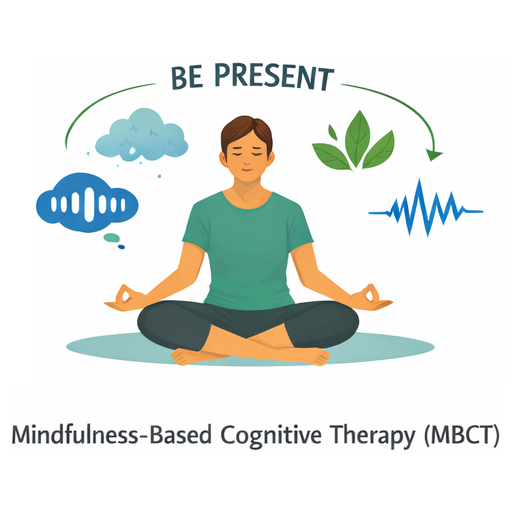
MBCT integrates mindfulness practices with cognitive therapy to prevent relapse in depression and anxiety. It teaches awareness of thoughts and feelings without judgment, reducing rumination and promoting emotional regulation.
What is MBCT?
Mindfulness-Based Cognitive Therapy is a psychological approach designed to prevent relapse in individuals with depression and manage anxiety. It combines principles of cognitive behavioural therapy (CBT) with mindfulness practices, encouraging awareness of thoughts and feelings without judgement.
Developed in the late 1990s, MBCT focuses on breaking the cycle of negative thinking patterns that often lead to emotional distress. By cultivating mindfulness, individuals learn to observe their mental processes and respond more calmly to stressors.
This therapy is widely used in clinical settings and has shown effectiveness in improving emotional regulation, reducing rumination, and enhancing overall well-being.
- Persistent sadness
- Negative thought patterns
- Anxiety and worry
- Fatigue or low energy
- Difficulty concentrating
- Sleep disturbances
- Loss of interest in activities
- Feelings of hopelessness
What are the underlying scientific principles?
Mindfulness-Based Cognitive Therapy (MBCT) integrates principles of cognitive psychology with mindfulness practices rooted in Buddhist traditions. It aims to prevent relapse in depression and improve emotional regulation by fostering awareness of thoughts and feelings without judgment. MBCT teaches individuals to observe mental patterns, reducing automatic negative thinking and enhancing resilience. By combining mindfulness meditation with cognitive restructuring, MBCT helps break cycles of rumination and promotes adaptive coping strategies. Its scientific foundation lies in neuroplasticity, attentional control, and behavioural change, making it a powerful intervention for mental health and overall well-being.
Neuroplasticity
Attentional Control
Metacognitive Awareness
Emotion Regulation
Mindfulness fosters acceptance and non-reactivity, activating prefrontal regions that modulate limbic activity, reducing emotional volatility and improving adaptive coping strategies.
Cognitive Decentring
Behavioural Activation
By cultivating mindful awareness, individuals engage in purposeful actions aligned with values, counteracting avoidance behaviours and reinforcing positive mood states.
How does it work?
Mindfulness-Based Cognitive Therapy (MBCT) is a structured, evidence-based programme designed to prevent relapse in individuals with depression and manage stress, anxiety, and emotional challenges. It combines principles of cognitive behavioural therapy with mindfulness practices, encouraging participants to observe thoughts and feelings without judgement. By fostering awareness of the present moment, MBCT helps break automatic negative thinking patterns that often lead to emotional distress. Typically delivered in group sessions over eight weeks, MBCT equips individuals with practical tools to cultivate resilience, improve emotional regulation, and enhance overall mental well-being. Its effectiveness is widely supported in clinical and workplace settings.
Core Concept
MBCT integrates mindfulness and cognitive therapy to help individuals recognise and disengage from harmful thought patterns, promoting mental clarity and reducing vulnerability to depression and anxiety.
Programme Structure
An eight-week course combining guided meditation, breathing exercises, and cognitive strategies. Participants learn to observe thoughts and emotions without reacting, fostering acceptance and self-awareness.
Target Audience
Designed for individuals with recurrent depression or high stress levels. Increasingly adopted in workplaces to support employee well-being and resilience against burnout.
Benefits
Improves emotional regulation, reduces relapse risk, and enhances focus. Participants report greater calmness, improved coping skills, and better overall mental health.
Techniques Used
Includes body scans, mindful breathing, and thought-labelling exercises. These practices train attention and encourage non-judgemental awareness of present experiences.
Evidence and Effectiveness
Supported by clinical research showing significant reductions in depressive relapse and anxiety symptoms. Recognised as a cost-effective intervention for mental health maintenance.
When Is It Used?
Mindfulness-Based Cognitive Therapy (MBCT) is primarily employed to prevent relapse in individuals with recurrent depression. Designed as an eight-week programme, MBCT combines mindfulness practices with cognitive behavioural strategies to help people recognise and disengage from negative thought patterns before they spiral into depressive episodes. Beyond depression, MBCT is also used for managing anxiety disorders, bipolar disorder, chronic stress, and emotional distress. Research shows it can benefit those with chronic pain, fibromyalgia, and other health conditions by fostering resilience and emotional regulation. Its focus on present-moment awareness makes MBCT a powerful tool for long-term mental wellbeing.
Conditions and Issues Where MBCT Is Commonly Applied
What are the therapy options that Transformations Clinical Psychology can offer me?
Please contact us or follow this link if you would like to set up an assessment with a Psychologist at Transformations Clinical Psychology.
Meet Our Team
Meet our friendly and experienced team, here to help you with confidence and care.









Amy Wang
Mandarin
English


We are here to support you
Please contact us or click on this link if you would like to see one of our experienced psychologists
FAQ
Q1. What happens in the first session? Do I need to prepare?
Your first appointment is 50–60 minutes. We’ll get to know you—what’s been hard, what you’d like to change, and what’s helped before. You’re welcome to bring notes or just come as you are; we’ll go at your pace. Please complete the online intake and consent forms beforehand. Sessions are available in person (Sydney) or via secure telehealth across Australia. We’ll finish with a clear plan and time for your questions. If you’re in immediate danger, call 000.
Q2. How do fees and Medicare/private insurance work? Do I need a GP referral?
You can book without a referral. If your GP provides a Mental Health Treatment Plan, you may be eligible for a Medicare rebate. We’ll check your eligibility and confirm your out-of-pocket cost before you commit. Private health (Extras) can’t be claimed with Medicare for the same session—please check your fund for coverage. If cost is a concern, let us know and we’ll talk through options.
Q3. Will my information be kept confidential?
Yes. Your sessions and records are kept private under strict legal and ethical standards. There are a few exceptions—if there’s a serious risk of harm, concerns about a child or vulnerable person, or a court order. If we ever need to share information, we’ll explain why, what will be shared, and involve you as much as possible.