
Dialectical Behavioural Therapy (DBT)
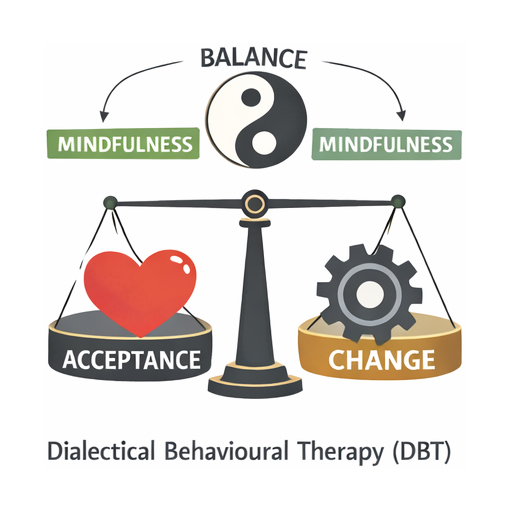
What is DBT?
Dialectical behaviour therapy (DBT) consists of a structured program of psychotherapy alongside psychoeducation, tailored to provide clients with a skill set for coping with intense emotions and managing social relations.
The “dialectic” in DBT translates to the idea that real life is complex, and that health is a continuous process. It is targeted towards balancing conflicting forces and investigating the validity of intense negative emotions.
DBT is an interplay of science and practice. It acknowledges the constant fluctuation of feelings, and that many of these feelings can be contradictory.
What are the underlying scientific evidence?
Various research studies have demonstrated that DBT may assist in reducing self-harming behaviours, may increase one’s treatment adherence, and may be effective in reducing one’s relapse. Several clients have reported that their well-being has significantly improved after engaging in DBT.
How does it work?
DBT helps patients recognise and challenge distorted thinking, such as catastrophising and all-or-nothing thinking, that may underlie their negative emotions and in turn, prompt maladaptive behaviour.
The elements of this therapy are targeted at teaching clients how to recognise, understand, label and then regulate their emotions, so that they can better manage interpersonal situations that induce negative emotions.
Clients may be asked to keep a diary that tracks their emotions, whereby they identify and rate the intensity of the emotions they experience each day. This will help clients gain awareness of their feelings, and understand which situations are triggering for them. Collaboratively, the client and therapist will engage in problem solving, where they discuss more adaptive ways the client might be able to behave so that they can experience more positive outcomes.
What to expect?
Given the skills-based and present-oriented nature of DBT, clients are required to practice these skills outside of their sessions (i.e., homework).
DBT has a specific focus on providing 4 key skills:
- Mindfulness – this allows clients to accept and be present in the moment, by taking note of the fleeting nature of their emotions. This also helps slow down their emotional reactivity which in turn, helps one utilise adaptive coping skills throughout stressful situations.
- Distress tolerance – this is the ability for clients to tolerate negative emotions as opposed to avoiding or escaping them, which would often make a challenging situation worse.
- Emotion regulation – these are strategies that provide clients with the capacity to control and change the intensity of their emotions that tend to be problematic in their everyday life.
- Interpersonal effectiveness – this provides the client with the ability to communicate with others in ways that are assertive and can therefore help the client build strength in their relationships.
When is it used?
Given the strong emphasis DBT places on emotion regulation, it has a wide applicability to various mental health conditions including:
- Personality disorders
- Self-harm
- Post-traumatic stress disorder
- Bulimia
- Binge-eating disorder
- Depression
- Anxiety
- Substance use disorder
- Bipolar disorder
What are the therapy options that Transformations Clinical Psychology can offer me?
Please contact us or follow this link if you would like to set up an assessment with a Psychologist at Transformations Clinical Psychology.
Meet Our Team
Meet our friendly and experienced team, here to help you with confidence and care.









Amy Wang
Mandarin
English


We are here to support you
Please contact us or click on this link if you would like to see one of our experienced psychologists
FAQ
Q1. What happens in the first session? Do I need to prepare?
Your first appointment is 50–60 minutes. We’ll get to know you—what’s been hard, what you’d like to change, and what’s helped before. You’re welcome to bring notes or just come as you are; we’ll go at your pace. Please complete the online intake and consent forms beforehand. Sessions are available in person (Sydney) or via secure telehealth across Australia. We’ll finish with a clear plan and time for your questions. If you’re in immediate danger, call 000.
Q2. How do fees and Medicare/private insurance work? Do I need a GP referral?
You can book without a referral. If your GP provides a Mental Health Treatment Plan, you may be eligible for a Medicare rebate. We’ll check your eligibility and confirm your out-of-pocket cost before you commit. Private health (Extras) can’t be claimed with Medicare for the same session—please check your fund for coverage. If cost is a concern, let us know and we’ll talk through options.
Q3. Will my information be kept confidential?
Yes. Your sessions and records are kept private under strict legal and ethical standards. There are a few exceptions—if there’s a serious risk of harm, concerns about a child or vulnerable person, or a court order. If we ever need to share information, we’ll explain why, what will be shared, and involve you as much as possible.